Tuesday, May 22, 2018

Disruptive Marketing: …Navigating the New Normal

disruptive_marketing_linkedin

Frequent readers will know I lie to emphasize the human element of processes and systems. Geoffrey Colon’s book Disruptive Marketing – What Growth Hackers, Data Punks, and Other Hybrid Thinkers Can Teac Us About Navigating the New Normal. That title was the only thing I didn’t like about the book.  Almost immediately, this book started triggering ideas in my mind for ways to improve the customer experience. I’m hooked on any book that instantly provides me with new ways to approach topics.


One big take away for me was a reminder that two-thirds of people’s screen time is spent with digital media. This is websites, social platforms, videos, etc. TV has taken a backseat to the mobile phone.  A big smack to the face was pointing out that most companies are significantly under invested in mobile advertising. I also learned a new word. Netnography which is the study of human behavior on the internet.


For me, Geoffrey’s approach made perfect sense. I enjoyed confirmation that methodologies I’ve been using and recommending are valid and revenue generating. He also reaffirms the consumer driven approach. Create content that makes people feel good. Let’s the consumer advertise for you. Ensure the consumer knows you appreciate them, that you are listening, and that you empathize with them. Additionally, be creative instead of stiff. Use free sources of content. Tell compelling stories. Social sells. Most importantly, know where your customers are on these different media systems.


I also loved his section on being a life-long learner.  As one, I enjoyed being reminded of the Learn, Unlearn, and Relearn mantra from the 1970’s book Future Shock by Alvin Toffler. I am glad he pointed this out.  People forget how fast things change.  The platforms, services, and methodologies we use change faster these days than ever before.  A person could get buried in the plethora of social media management tools. Trying to make sense of all the analytics data from Google is overwhelming to newbies.


Lastly, I appreciate Geoffrey’s recommendation to be a mix of artist and data analytics.  In a time where volume of education is a measure of capability (it isn’t), it is good to know being a hybrid thinker has a place to excel. It is also a sign of the future.  Marketing is no longer about glad-handing and dusting the isle end cap, one has to have the eye for design and the mind for data analytics. While the consumer is human, the behaviors that drive them will all come in the forms of various data. Disruptive marketing is all about being able to process both.


AmazonBuyItButton

View My Other Book Reviews


from Priceless Geek https://ift.tt/2IC6P64
via IFTTT

Monday, April 23, 2018

Speaking Engagement: Manufacturing & Technology Conference–May 10th

Case-Study_-SEEPEX


Almost half of all cyberattacks are aimed at small and midsized businesses (SMBs) because many do not have sufficient defenses in place.  While SMBs may have firewalls and antivirus solutions, these technologies aren’t designed to protect against today’s sophisticated cyberattacks like phishing, exploit kits and malvertising, which make up 90% of how attacks start.

Join Mike Brooks, IT Manager of SEEPEX and Todd O’Boyle, CTO of Strongarm as they discuss a three-step plan that manufacturers can use to facilitate cybersecurity awareness across their organization, including how to analyze their current security posture, how to better plan and prepare for cyberattacks and how to execute an incident response plan once an attack takes place. Participants can download a copy of an incident response plan that helps them plan for responding to a cyberattack.

Join Us: Thursday, May 10th, 2018 @ 11am in Room 302C

Raleigh NC Convention Center

View on the Expo’s page                                                                                    View the case study


from Priceless Geek https://ift.tt/2K5ge7r
via IFTTT

Web Analytics 2.0


webanalytics_linkedin


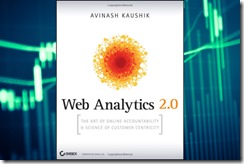
It has been web marketing book week so far here at Priceless Geek. First we took a look at Inbound Marketing by the founders of HubSpot. Then we took a look at Marketing 2.0 by Bernie Borges.  Today we are looking at Web Analytics 2.0 by Avinash Kaushik of Sybex. The tagline on this book is, “The art of online accountability and science of customer centricity.”

Kaushik has authored an excellent intro into web analytics.  As you can see, when I talked about the rabbit hole of online marketing topics, I wasn’t kidding.  Here we are digging into making sense of all the analytics your website can provide your business. It is easy to get lost in the endless fields of available data. This book gives you a foundation on where to start along with a path to follow for success.

The book is precisely organized as your would expect from someone with an analytical mind. Each major topic is broken out into small sections.  This style makes this thick book seem like a quick read. Kaushik covers the foundational web metrics like visits, bounce, and conversion.  Then he expands into SEO, traffic analysis, and KPI’s.  Additionally, he also covers great topics like vetting your metric software tools and vendors, figuring out which metrics are best for your purpose, and how to ensure upper management is involved.

Web Analytics 2.0 is a the book you need to read once you have your website running and some inbound marketing in place. It will help you transform your site from a cost center to a profit center. 


AmazonBuyItButton

View My Other Book Reviews


from Priceless Geek https://ift.tt/2qQOECN
via IFTTT

Thursday, April 19, 2018

Diffusions of Innovations

diffusionsofinnovations_linkedin

Everett M. Roger’s Diffusions of Innovation is a hefty analysis of the diffusion approach. This is a framework in which to evaluate the impact of developmental programs.  Roger’s takes a look at this approach in combination with the convergence of information exchange.  Ultimately, this book was written as a challenge to diffusion scholars to expand beyond their traditional methods.

Sounds like an extremely dry topic doesn’t it? I’d love to claim otherwise.  This book is a tough read.  It is packed with scholarly information. It reads like a textbook. Regardless, it is fascinating as it examines how innovations are communicated over time through social channels. For me, it is a form of change management. This book shows how and why innovation (or change) flows through an organization.

Understanding the stages of innovation diffusion is much like learning the stages of team development.  Once you know them, you can never unlearn them. If you are involved with change or developing solutions, you will see the phases, the communication networks, the types of human behavior described in this book in every facet of your work interactions. If you can master the information in this book you can practically predict the people and processes that will make your efforts succeed. You will also have the wisdom to avoid the people and pitfalls that can hurt your efforts.  You’ll also learn about how to effectively market your change efforts through the most effective communication channels.

I should warn you, this book is not new.  The most recent edition was released in 2003. The first edition was in 1962. Maybe that is why it is so powerful.  The knowledge has evolved over decades.  I challenge you to chip away at the knowledge in this book.  You will not regret it.


AmazonBuyItButton


from Priceless Geek https://ift.tt/2EZdDrQ
via IFTTT

Thriving on Chaos with A Passion for Excellence

TomPeters_linkedin

In 1790, Edmund Burke wrote the phrase, “People will not look forward to prosperity who never look backward to their ancestors.” This phrase gave birth to a more familiar saying from George Santayana in the early 1900’s.  You’ve probably heard a version of it, but the actual quote is, “Those who cannot remember the past are condemned to repeat it.” 

Today we travel back in time to 1987 to relive the business management sensation Thriving on Chaos by Tom Peters.  The first time I read this wonderful book was not in the 80’s.  It was long enough ago that this book molded some of my earliest management philosophies. It was long enough ago that, previous to this re-read, I had forgotten I could attribute Tom Peters for those ideas.  Honestly, I had forgotten I read the book.  Even so, while I was browsing my local used bookstore, I found a double book version of Thriving on Chaos and A Passion for Excellence

Just perusing the contents section create a flood of memories and a since of awe. It was a combination of déjà vu, relevancy, and a history lesson.  I realized I’ve been re-reading this book in updated form for over twenty years. Granted the company names have changed, the technology has changed, but the underlying wisdom has not. The book kicks off with the famous words, “There are no excellent companies.” Then goes on to discuss how the company image may be flawless, but it doesn’t take much digging to find the cracks behind the sheen. It instantly made me think of Google and Facebook.

We find buzzwords that are still relevant but have undergone transformation. Internationalism is now globalization. In 1987, we had Computer Integrated Manufacturing, now we have Manufacturing Execution Systems and the Internet of things. Peters talks about failing fast, focusing on quality,  and squishy human factors (we would come to call Emotional Intelligence in 1990).

What I found with both these Peters book is that they are basically a collection of fundamental business management concepts bundled into one focused, step by step book. You see ideas from Mckinsey, Deming, Shewhart and others. However, this is all before Six Sigma, Lean Manufacturing, Agile, and even total quality management.

Re-reading this left me feeling inspired about improving my own work. The same as it did for people 31 years ago.

I could go on.  However, you can pick this book up for just a couple dollars on Amazon.  I highly recommend that you do. Consuming this piece of business management history could save you from repeating mistakes in your present.

AmazonBuyItButton


from Priceless Geek https://ift.tt/2HJUr4h
via IFTTT

Sunday, April 1, 2018

Book Review: Fatal System Error

FatalSystemErrorCover_Linkedin

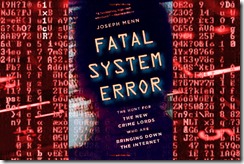
Author Joseph Menn has masterfully created an intense page turner about cybercrime.  If you are at all interested in crime novels, cybercrime, cybersecurity, or Russian organized crime, this is a must read. 
This book is written mostly from the white hat and law enforcement perspective. It is a refreshing viewpoint.  It is a frustrating view point. You get to cheer for the good guys in this book. It reads like a novel and it reads fast.  I would have read it all in one day if I had the time. I had to spread it across two days.  I could only think about getting back to the book while I was elsewhere.
I don’t want to spoil the plotline for you, so I will not delve deeper than a topical recap.  What I took away from this non-fiction novel was that cybercrime much larger, deeper, and wide-spread than I ever knew.  Furthermore, online poker is a front for Russian and Italian organized crime, among other criminal enterprises. There is huge money in online gambling and spam. Furthermore, Russia is basically a state run criminal enterprise. These are scary and eye-opening topics.
Mr. Menn’s book may read like a cyber-thriller, but it is a well documented and fascinating piece of journalism. I love the extensive notes in the back. While this book is from 2010, it is as relevant today as it was then. This book further solidifies the fact there is a cyber war going on between countries, between business, and even between individuals.  The average user is minimally impacted for now. However, the big money cyber crime generates will elicit larger and evermore expansive enterprises.  The cyber world will only get more dangerous and so will the real world impact.

AmazonBuyItButton


from . https://ift.tt/2GZTi8b
via IFTTT

Tuesday, March 27, 2018

Book Review of Sales Management. Simplified.

SalesMmtSimpliiedThis is a dangerous book. The amount of anxiety you’ll feel after finishing this book depends on your role within your company. As an executive or top-level sales manager, you may find your sales culture in crisis. This may be a good thing. It will motivate you. For those in a sales role with limited capacity for change, you’ll be as frustrated as you are motivated. Pass this book up the chain at your own risk. Those in supportive roles, such as sales admins, information technology, purchasing, or even order processing, you’ll mostly be angry.

My perspective on this comes from being an inside tele-sales agent in a previous career, as well as, currently being an IT Project Manager for sales tools. There are parts I love about this book and parts that annoy me. Keep reading to follow a perspective not seen in the Amazon reviews.

Let’s start with the positive. The last third of this book discusses managing, growing, and making your team accountable. It is organized in a fashion that new and seasoned sales managers can follow to success. I mean that wholeheartedly. It is specifically a guidebook to sales team success. Actually, the methods here are relevant to any team that wants to be a high-performance machine. The author emphasizes focus, accountability, and motivation. I absolutely recommend the last third of this book for anyone needing a jolt of motivating for their team.

The first two thirds of this book are an echo chamber for sales complaints. If you’ve ever sat in a sales strategy session you’ll be familiar with the complaining, blaming, and buck passing that goes on. There is a clear warning on the book’s cover that this will occur. Getting “straight truth” is typically code for pontificated b!tching. Ironically, Mike Weinberg, discusses this phenomenon during this phase of the book and even has mitigation techniques.

Another clear warning, given in the first few pages, is that even the author, who after the first two thirds of the book should be referred to as Mike Whine-berg, declares there is no new concepts in this book. If you’ve been consuming sales and business books for the last twenty years or more, you’ll have heard every concept in this book previously. That may seem scathing, but the author and I agree here. Furthermore, it highlights Mr. Weinberg’s mastery of salesmanship. He has sold us all knowledge we already had and we will thank him for it.

Even so, it is Mike’s experience and organization of the book that make it a powerful motivational tool. You will be moved to action after experiencing this book. That is were the danger lies. This book pushes the idea that a company’s sales department should be an island. Seemingly, an all fun, drinks are on the company, I’m here to smile and shake hands, kind of island.

I fully understand that relationships surrounding sales deals are more powerful than the solutions provided. Islands have their own culture. Islands can be high functioning ecosystems. Islands are awesome. Modern islands cannot thrive without support from the mainland. Food, water, and technology must come from the mainland. Products and refuse must go to the mainland. Cultivating the island while ignoring the mainland is planting the seeds of revolt.

No one wants a culture of sales versus the “support staff.” Support staff translates to anyone who is not in sales. It is unhealthy and doesn’t help the long-term success of the company. This is one of my major issues with the advice of this book. It enthusiastically tells sales that only their results matter and to slash the throats of anyone in their way. I’m one who thinks organizational success is achieved through collaboration. For me, slicing throats just means we are going to have to replace the people, knowledge, and carpet much faster than normally required.

Additionally, I was highly annoyed at the excessively long rant about CRM systems in this book. I understand and agree that a CRM should not hinder sale’s ability to get things done. Any good system should be a multiplier of productivity. I also agree with the author that many companies don’t get this right. When companies do get it right, it is through collaboration, and the result is more money for everyone. CRM systems allow sales support teams like marketing, engineering, and customer service to provide expedited service to sales and customers. CRM systems centralize data. In the 21st century, a company who doesn’t have a good handle on their data won’t be around for the 22nd century. Much of the important customer relations information is stored in the heads of the sales team. The company doesn’t benefit from data outside of its systems. In fact, the company loses data when team members leave.


The company gets injured when people leave. Important information is exfiltrated; whether intentional or not. This is another danger of this book. In the Mike Wineberg world, the sales rep doesn’t care about anyone or anything outside of their own success. Sure, the company benefits from rep’s success while that rep is with the company. In other words, the island is successfully producing widgets for the mainland. If those on the mainland are frustrated with the island, those widgets may not get picked up expediently, they may not get shipped to customers in a timely fashion, they could be sold off the docks and never make it to the warehouse.

The point is a company is healthy when all its parts work in harmony.Machine-Gun-Salesman-001 Too much focus on one area and others atrophy. Disharmony in one function can disrupt all functions. Sales is the key function to moving widgets out of the building and into customers hands. Sales teams like to think everyone else is making a living because sales is moving product. The product doesn’t move or exist without the engineers and logistics teams. Every company is an ecosystem. There must be balanced to have a great ecosystem.

There is no magic bullet to achieve a great company. There is no magic bullet to killer sales. Mike Wineberg and I agree there. Regardless, there are many good points to take away from this book whether you are in sales or not. The newer you are to sales, sales management, and/or a leadership position, the more you will take away from this read. For me, it has given me ideas on how to present to sales, truncate meetings, question communications methods, and ensure accountability for myself and my team.

Happy selling. May the sales funnel be ever in your favor.

from . https://ift.tt/2ITP3Md
via IFTTT